Safe Disposal Of Dental Materials is a practical responsibility, not merely an environmental preference. A dental clinic produces sharps, used gloves, amalgam particles, disinfectant containers, and contaminated gauze every day. Each item needs a clear destination. A filled sharps container should never sit beside an open treatment tray. Small mistakes can expose cleaners, patients, and waste handlers.
The World Health Organization’s Global Analysis of Health Care Waste (2022) reports that about 85% of healthcare waste is general waste. The remaining 15% is hazardous and may carry infectious, toxic, or radioactive risks. Dental practices also face mercury concerns. The U.S. Environmental Protection Agency’s Dental Office Category Rule requires many practices to control amalgam waste entering wastewater systems. These reports show why disposal procedures must be specific, documented, and regularly reviewed.
“There is no health without a healthy environment,” says Dr. Maria Neira, Director of the WHO Department of Environment, Climate Change and Health. Her statement fits the dental setting closely. Safe disposal protects the operatory, the community, and waterways beyond the clinic. Still, written policies alone are not enough. Staff may understand the rule yet miss a tiny amalgam fragment under a chair. Training, labeled containers, collection records, and approved waste contractors create stronger protection. The process is not perfect. It deserves honest checks, especially when busy schedules encourage shortcuts. This introduction examines practical controls, material categories, staff responsibilities, and reliable disposal systems for safer dental care.
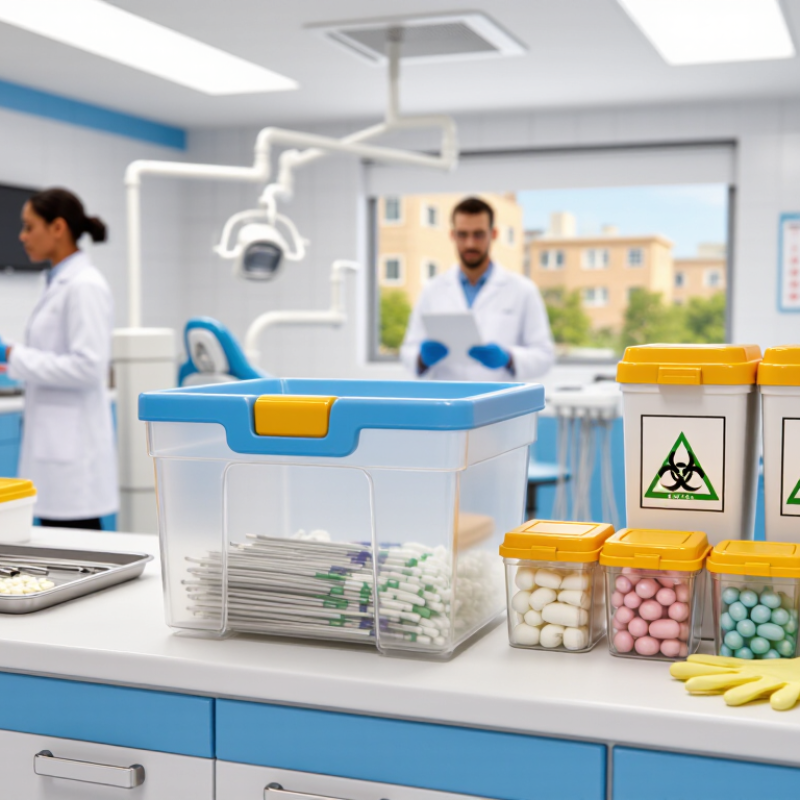
Safe disposal of dental materials means controlling waste from the moment it is created until final treatment or recovery. Its scope includes identification, segregation, storage, transport, processing, and documentation. It covers more than discarded instruments. Dental offices also handle sharps, amalgam, disinfectants, radiographic chemicals, resin residues, impression materials, and contaminated dressings. The World Health Organization’s 2022 report estimates that 85% of healthcare waste is general waste, while 15% may be hazardous. Dental clinics still need careful classification. Small errors matter.
Safe practice begins beside the dental chair. Sharps should enter rigid, labeled containers immediately. Amalgam particles and extracted teeth require separate handling, based on local requirements. Mercury-containing waste should never be mixed with ordinary rubbish or washed into drains. The United Nations Environment Programme’s Global Mercury Assessment 2018 identifies dental amalgam as a continuing mercury source. Collection containers should remain closed, upright, and dated. Staff need written procedures, suitable protective equipment, and records from collection through authorized treatment.
The definition also includes prevention. Buying only necessary quantities, using digital imaging, and reducing contaminated packaging can lower disposal risks. Yet “safe” is not absolute. A clinic may have excellent containers but weak staff training. That gap deserves attention. Reported weights should be checked against purchasing and treatment records, because missing data can conceal poor segregation. Local environmental and healthcare-waste rules differ, so professional guidance must be verified before changing procedures. WHO and UNEP provide useful frameworks, but practical decisions still require trained dental and waste-management professionals.
Safe disposal begins with identifying materials that can injure people, pollute water, or react dangerously. Dental amalgam scraps and teeth containing amalgam need separate collection. They should not enter regular trash or drains. Store them in sealed, clearly labeled containers designed for this waste stream.
Sharps require rigid, puncture-resistant containers. Needles, burs, orthodontic wires, and broken instruments belong there, even when they look clean. Keep lids closed. Contaminated gauze, suction tips, and disposable barriers may require regulated clinical-waste handling, depending on local requirements. Staff should never compress these items by hand.
Chemical materials need careful attention. Disinfectants, solvents, sterilizing chemicals, expired medicines, and radiographic processing liquids can require different disposal routes. Read the safety data sheet before moving them. Never mix unknown liquids. Keep containers upright, capped, and away from heat. Lead foil and certain dental metals should also be collected separately for approved recovery or treatment.
A practical clinic uses labeled bins near the point of use. This reduces carrying and accidental mixing. Written procedures should identify who checks containers and when contractors collect them. Training records provide useful evidence, but paperwork cannot replace daily observation. A label may be present while the wrong material sits inside. That uncomfortable possibility deserves regular audits. When local guidance is unclear, consult the relevant environmental authority or a qualified healthcare-waste professional.
Safe disposal of dental materials is governed by regulations and daily responsibility. The World Health Organization reports that about 85% of healthcare waste is general waste, while 15% may be hazardous. Dental clinics must separate sharps, contaminated items, chemicals, and amalgam at the point of use. A used needle belongs in a rigid, puncture-resistant container. Chemical disinfectants require labeled storage and approved collection. Local rules differ, so staff should verify requirements with environmental authorities and licensed waste contractors.
Mercury management needs special care. The Minamata Convention encourages countries to reduce dental amalgam use and prevent mercury pollution. Its requirements support practical controls, including amalgam separators, sealed containers, and documented collection. The United Nations Environment Programme has identified dental applications as an important mercury-use area. These facts make training more than a paperwork exercise. A small spill near a chair can spread through drains, floors, and cleaning tools. Waste records should show dates, quantities, storage locations, and transfer documentation. Records can still be incomplete. That weakness deserves honest review.
Tips: Keep color-coded bins beside treatment chairs. Never overfill sharps containers. Inspect lids before transport. Train every employee, including temporary staff. Review procedures after spills, inspections, or changes in local regulation. WHO data can guide risk planning, but it cannot replace regional legal advice. A practical audit may reveal mixed waste in one bin, missing labels, or unclear responsibilities. Fix those details promptly, and record who completed the correction.
Sources: World Health Organization, Health-care Waste Fact Sheet, 2018; United Nations Environment Programme, Global Mercury Assessment, 2018; Minamata Convention on Mercury.
Key U.S. dental amalgam compliance milestones are shown below. Requirements for other dental waste streams may differ by country, state, and local authority.
Safe disposal responsibilities:
Regulatory reference: U.S. EPA Dental Office Category requirements, including the 2017 rule publication and 2020 compliance milestones. Local requirements may be stricter.
Safe disposal of dental materials begins at the treatment room, not the waste collection area. Staff should wear suitable gloves, eye protection, and protective clothing before handling used materials. Keep clean items separate from contaminated waste. Place needles, blades, and other sharps directly into a rigid, puncture-resistant container. Never push them down by hand.
Label each container clearly with its waste type and collection date. Amalgam waste, chemical solutions, disinfectants, and clinical waste require separate handling. Follow the safety data sheet for each product, especially when storing liquids or powders. Containers should remain closed, upright, and away from heat, drains, and public access. A small spill kit should be nearby, with instructions staff can understand quickly.
Check the container before it becomes full. Overfilled bags create unnecessary exposure risks. Arrange collection through an authorized waste service and keep transfer records for traceability. Local requirements may differ, so the practice manager should confirm current guidance with the relevant environmental authority. One overlooked detail is labeling. A rushed label can delay collection or cause incorrect treatment. The process is not flawless; staff may forget a date or place an item in the wrong container. Regular training, short visual checks, and honest incident reviews can correct these weak points before they become routine.
Improper disposal of dental materials creates environmental and health risks long after treatment ends. The World Health Organization reports that about 15% of healthcare waste is hazardous. This includes sharps, chemicals, contaminated items, and certain dental residues. A used needle can puncture a thin waste bag. Mercury can also enter wastewater when amalgam particles are rinsed away. The danger is quiet, but persistent.
Dental amalgam deserves particular attention. The United States Environmental Protection Agency estimated that dental offices discharged about 103,000 pounds of mercury and 29,000 pounds of amalgam annually before stronger controls. The United Nations Environment Programme also identified dental amalgam as a significant mercury-use sector in its Global Mercury Assessment 2018. Mercury can accumulate in aquatic environments and affect nervous system development. Liquid fixer may add silver contamination. Resin dust can irritate skin and airways. Small quantities still matter.
Safe disposal starts with separation at the chairside. Place sharps, amalgam particles, chemical liquids, and ordinary waste into clearly labeled containers. Never mix amalgam with general refuse. Use closed collection systems and authorized waste contractors that provide transfer records. Staff training should include spill response, container inspection, and hand hygiene. Weighing waste monthly can reveal unusual increases. The overlooked weakness is often a rushed cleanup. A bin may look sealed, yet contain mixed materials. That assumption needs questioning. Each clinic should review its procedure against current local requirements and trusted guidance from health and environmental authorities.
| Dental Material | Main Environmental or Health Concern | Risk of Improper Disposal | Safe Disposal Method | Handling Priority |
|---|---|---|---|---|
| Dental amalgam and amalgam capsules | May contain elemental mercury, which is toxic to people and aquatic ecosystems. | Mercury can enter wastewater, soil, or air and may be transformed into methylmercury in aquatic environments. | Collect particles, scrap, and capsules in a closed, labelled amalgam container. Use an approved amalgam separator where required and send the material to an authorized recycling or hazardous-waste facility. | Very high |
| Used needles, scalpels, and orthodontic wires | Sharps can puncture skin and may transmit blood-borne pathogens if contaminated. | Loose sharps can injure dental staff, waste workers, patients, and members of the public. | Place immediately into a rigid, puncture-resistant, leak-resistant sharps container. Do not recap, bend, break, or place sharps in ordinary trash. | Very high |
| Blood-soaked gauze and contaminated soft waste | May contain blood or other potentially infectious materials. | Improper handling can expose workers to infectious material and cause leakage during collection or transport. | Segregate according to local healthcare-waste rules. Use marked, leak-resistant bags or containers and arrange treatment or disposal through an authorized service when required. | High |
| Disinfectants and sterilization chemicals | Some products are corrosive, reactive, toxic, or harmful to aquatic life. | Pouring concentrated chemicals into drains can cause chemical exposure, pipe damage, or contamination of wastewater. | Keep in original labelled containers, never mix incompatible chemicals, consult the safety data sheet, and use local hazardous-chemical disposal procedures. | High |
| Dental radiographic fixer | Used fixer can contain dissolved silver, a metal that is toxic to aquatic organisms at elevated concentrations. | Discharge to a drain can increase silver loading in wastewater and treatment residues. | Collect separately in a sealed, labelled container and recover silver or transfer the solution to an authorized hazardous-waste or photographic-chemical recycler. | High |
| Lead foil from traditional X-ray film | Lead is a persistent toxic metal that can affect the nervous system and other organs. | Landfilling or uncontrolled handling may allow lead to contaminate soil or create occupational exposure. | Keep separate from general waste and send to a permitted lead or hazardous-metal recycling facility. Avoid cutting, burning, or melting it. | High |
| Expired medicines and anesthetic cartridges | Active pharmaceutical ingredients can remain biologically active after use or expiry. | Flushing or disposal with ordinary waste can contribute to pharmaceutical residues in water or accidental exposure. | Keep in secure, labelled storage and return through an authorized pharmaceutical-waste or healthcare-waste program. Do not flush unless specifically required by local guidance. | High |
| Resin composites, bonding agents, and uncured acrylics | Uncured components may contain reactive monomers and additives that can irritate skin or harm aquatic life. | Liquid residues discharged to drains can enter wastewater before they are fully cured or treated. | Prevent spills, keep containers closed, absorb liquid residues with suitable material, cure small permitted residues when appropriate, and follow the product safety data sheet and local waste rules. | Moderate |
| Used impression materials, gypsum, and dental stone | Generally low toxicity, but hardened material can create dust, block plumbing, and add to solid waste. | Rinsing large quantities into sinks may cause drain blockages and increase suspended solids in wastewater. | Remove excess material before cleaning instruments, allow appropriate materials to set, and dispose of solid residues according to local non-hazardous or contaminated-waste requirements. | Moderate |
| Empty containers and packaging | Containers may retain chemical, pharmaceutical, or biological residues. | Recycling or general disposal without proper segregation can expose handlers or contaminate recyclable material. | Follow the label and safety data sheet. Decontaminate only when permitted; otherwise manage containers as chemical, pharmaceutical, or infectious waste. | Moderate |
Separation should begin at the treatment chair, not in the waste room. Keep clean supplies away from contaminated materials.
Place sharps directly into a rigid, puncture-resistant container. Never push them down by hand. Keep the container upright and closed.
No. Collect amalgam particles separately in a sealed, clearly labeled container. Never rinse particles into a drain.
Store each chemical according to its safety data sheet. Keep containers closed, upright, cool, and away from drains or public access.
Mark the waste type and collection date clearly. A rushed label can delay collection or cause incorrect handling.
Inspect containers before they become full. Overfilled bags increase exposure risks. Do not wait until disposal becomes urgent.
Staff should wear suitable gloves, eye protection, and protective clothing. Hand hygiene remains important after handling waste.
Keep a small spill kit nearby, with simple instructions. Record the incident honestly and review what failed. Small errors matter.
Use short visual checks, regular training, and transfer records. Monthly weighing may reveal unusual increases. The process is not flawless.
Use an authorized waste service and retain transfer records. A practice manager should confirm current requirements with the relevant environmental authority.
Safe Disposal Of Dental Materials is the organized process of identifying, separating, storing, transporting, and treating dental waste in ways that protect patients, staff, waste handlers, communities, and the environment. It covers common waste as well as materials requiring special handling, such as sharps, contaminated items, chemical residues, amalgam-related waste, radiographic materials, disinfectants, and expired products. Each category should be collected in suitable, clearly labeled containers and kept separate to prevent injury, contamination, or harmful reactions.
Effective dental waste management also depends on following applicable local requirements and assigning clear responsibilities to dental practices and authorized waste contractors. A practical procedure includes sorting waste at the point of use, sealing containers securely, storing them in a controlled area, documenting transfers, and arranging appropriate treatment or disposal. Improper disposal can pollute water and soil, release hazardous substances, spread infection, and expose workers or the public to avoidable risks. Careful training, routine inspections, and consistent recordkeeping help ensure safe and environmentally responsible handling.

TRV Medical